
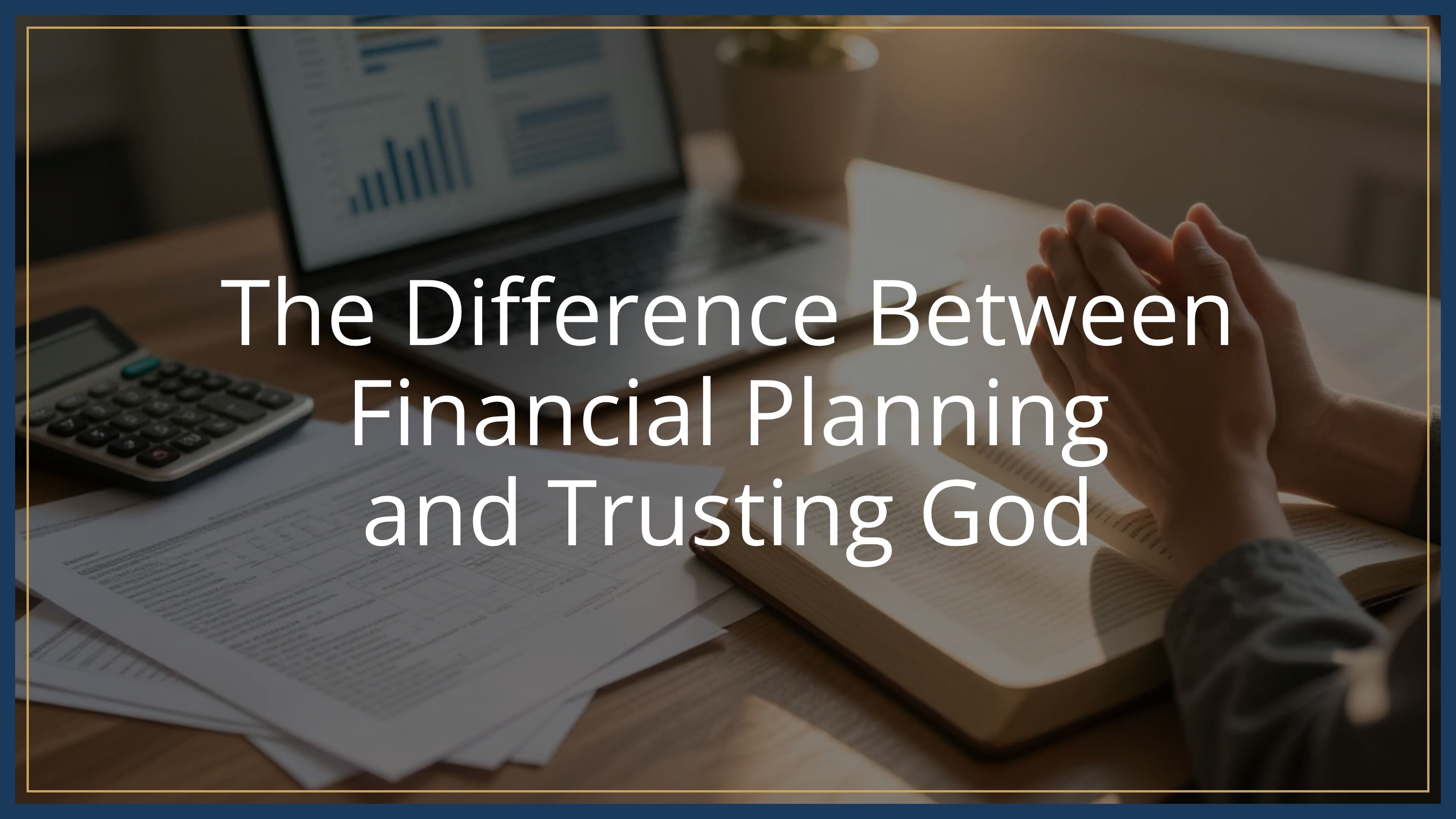
The Difference Between Financial Planning and Trusting God
Many Christians have wrestled with a common question: If I'm supposed to trust God, why do I need a financial plan?
At first glance, planning and trusting can seem like opposites. Planning involves setting goals, creating budgets, saving money, and preparing for the future. Trusting God requires dependence, faith, and surrender. Some Christians fear that too much planning reveals a lack of faith. Others place so much confidence in their plans that they rarely think about trusting God at all.
The truth is that biblical financial stewardship requires both.
Planning Is Biblical
Scripture consistently commends wise preparation.
In Proverbs 21:5, we read, "The plans of the diligent certainly lead to profit, but anyone who is reckless certainly becomes poor."
Likewise, Proverbs points to the ant as an example of wisdom because it stores provisions during times of abundance in preparation for future needs (Proverbs 6:6-8).
Planning is not a sign of distrust. It is often a sign of wisdom.
A budget is a plan. Saving for emergencies is a plan. Preparing for retirement is a plan. Creating an estate plan is a plan. These are practical expressions of stewardship. They demonstrate that we are thoughtfully managing the resources God has entrusted to us.
Throughout Scripture, God's people frequently planned. Joseph developed a strategy to prepare Egypt for a coming famine. Nehemiah carefully organized the rebuilding of Jerusalem's walls.
God is not opposed to planning. In fact, He often uses planning as a tool of faithful stewardship.
Trusting God Is Also Biblical
At the same time, Scripture repeatedly reminds us that our ultimate security does not come from our plans.
Proverbs 16:9 says, "A person's heart plans his way, but the Lord determines his steps."
James warns against making future plans without acknowledging God's sovereignty. Instead of confidently declaring what we will accomplish tomorrow, believers are instructed to say, "If the Lord wills, we will live and do this or that" (James 4:13-15).
Trust recognizes that while we can prepare for the future, we cannot control it.
No amount of saving can guarantee perfect health. No investment portfolio can eliminate uncertainty. No financial plan can prevent every setback.
Life happens.
Markets decline. Jobs change. Unexpected expenses arise. Economic conditions shift.
Trusting God means believing that His provision, wisdom, and care extend beyond the limits of our plans.
The Danger of Planning Without Trust
Financial planning becomes problematic when it creates a false sense of security.
It's easy to begin believing that a certain account balance, investment portfolio, or income level will finally make us feel safe. We start looking to our resources for peace rather than to the God who provided those resources.
Jesus warned against this mindset in the parable of the rich fool (Luke 12:16-21). The man accumulated great wealth and assumed his future was secure because of what he had stored up. Yet he failed to recognize his dependence on God.
The issue wasn't planning. The issue was misplaced trust.
When our confidence shifts from God to our financial resources, stewardship becomes self-reliance.
The Danger of Trust Without Planning
There's another mistake Christians can make.
Some use "trusting God" as an excuse to avoid wise financial decisions.
They don't budget because they trust God.
They don't save because they trust God.
They don't prepare for future needs because they trust God.
But that's not biblical trust. That's often poor stewardship dressed in spiritual language.
Imagine a farmer who refuses to plant crops because he's trusting God for a harvest. We would immediately recognize the problem. God ordinarily provides through wise action and faithful effort.
The same principle applies to money.
Trusting God does not eliminate our responsibility to steward resources wisely. It empowers us to steward them faithfully while recognizing that the outcome ultimately belongs to Him.
What Biblical Stewardship Looks Like
Biblical stewardship lives in the tension between planning and trust.
We create budgets, but we trust God.
We save for emergencies, but we trust God.
We invest for retirement, but we trust God.
We purchase insurance, but we trust God.
We prepare for the future while recognizing that our future rests in God's hands.
The goal is not to choose between planning and trusting. The goal is to plan faithfully while trusting completely.
A helpful way to think about it is this:
Planning is our responsibility.
Results belong to God.
We are called to be diligent stewards of what He has entrusted to us today. We are not called to control tomorrow.
A Better Question
Instead of asking, "Should I trust God or create a financial plan?" consider asking a different question:
"How can my financial plan reflect my trust in God?"
A God-honoring financial plan includes generosity because we trust God's provision.
It includes saving because we seek to steward wisely.
It includes margin because we recognize that life is unpredictable.
It includes contentment because we know that our hope is not found in money.
Most importantly, it remains flexible because we understand that God's plans are always better than our own.
This is Not a Competition
Financial planning and trusting God are not competing ideas. They are complementary practices of faithful stewardship.
The planner who doesn't trust God will eventually discover the limits of human control.
The believer who refuses to plan will often experience the consequences of poor stewardship.
Wisdom is found in holding both together.
Make a plan. Follow the plan. Adjust the plan when necessary.
But never place your faith in the plan.
Place your faith in the One who holds the future.
Are you struggling to overcome money issues? We can help.
Our Christian financial counselors are trained to help you overcome the stress and anxiety of money. Gain clarity, confidence, and peace in your financial situation.